
By La Conner Community News Staff
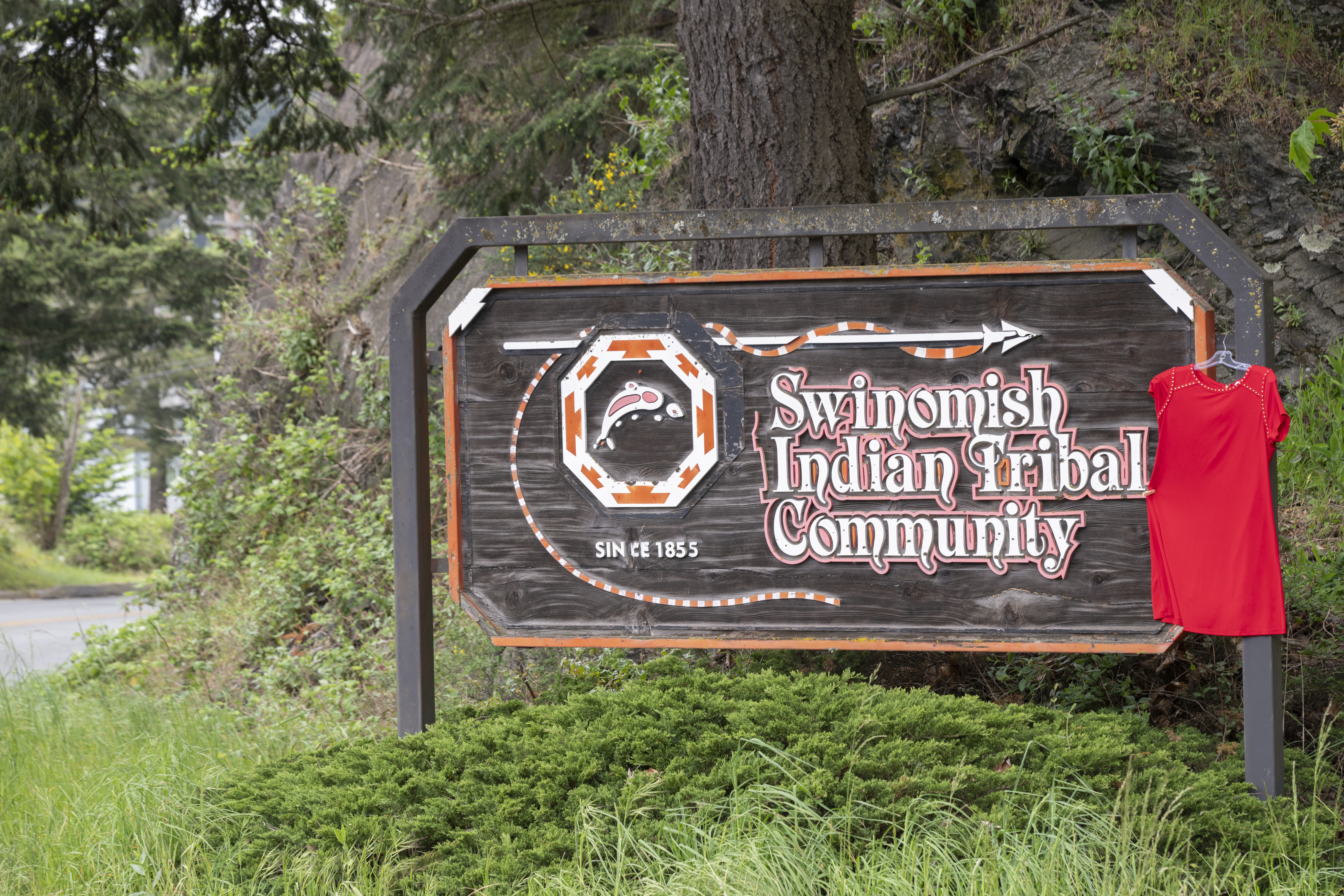
Red dresses hang quietly across the Swinomish Indian Tribal Community this week — bright, empty silhouettes moving in the breeze, each one a reminder of a life missing.
Today, those symbols take on deeper meaning.
On Tuesday, May 5, the Swinomish community will gather for a march and dinner in recognition of the National Day of Awareness for Missing and Murdered Indigenous Women, Girls and 2SLGBTQI+ people — a day known in Canada as Red Dress Day.
The dresses, part of a movement that has spread across Indigenous communities in the U.S. and Canada, are meant to make absence visible — to honor those who are missing and those whose lives were taken too soon.
The day itself has roots in federal recognition. In 2017, U.S. Sens. Steve Daines and Jon Tester of Montana introduced a resolution declaring May 5 as the National Day of Awareness for Missing and Murdered Native Women and Girls. It passed unanimously in the Senate.
Since then, Indigenous nations, advocates and organizations have expanded the day’s scope and visibility, recognizing not only women and girls, but also Two Spirit and LGBTQI+ relatives who are disproportionately affected by violence.
The statistics behind the movement are stark. American Indian and Alaska Native people experience rates of physical and sexual violence far higher than any other demographic group in the United States, according to data from the Centers for Disease Control and Prevention.
But the red dresses — and gatherings like the one at Swinomish — are not only about statistics. They are about community, remembrance and resilience.
Across the country, Indigenous communities are holding marches, vigils and events in the days surrounding May 5, creating space to honor those who are missing and to call for change.
At Swinomish, today’s march and shared meal offer a moment to come together — to remember, to support one another, and to ensure that those represented by the red dresses are not forgotten.
