
By Kari Mar
The La Conner Community News
There is a particular kind of pause I have come to recognize. It arrives in conversations after I casually mention my race in one way or another, and it looks like this: a fleeting silence, polite but puzzled, as someone studies my face and quietly recalculates who they think I am.
I have known that pause since childhood.
It is the pause of people trying to reconcile what they see with the stories America tells itself about race: that it is obvious, fixed, visible at a glance. The pause usually ends the same way — with gentle confusion, as though I have mistakenly placed myself in the wrong category.
But my family history has never been difficult for me to see.
For Asian Americans and Pacific Islanders, our stories are often invisible because they do not fit neatly into America’s black-and-white understanding of race. May is Asian American and Pacific Islander Heritage month, so it feels like a good time to talk about this, particularly with the 250th anniversary of the Declaration of Independence coming up.
My family story is not the genericized story of the American dream.
In many ways, it is a colonized story that may sound familiar to Indigenous communities across the Americas because, in the late 19th century, the United States exported much of its colonization playbook to Japan and Okinawa. My mother was punished in school for speaking her native language. Uchinanchu cultural practices were described as backward, dirty or savage. Okinawans were taught to feel shame about who we were.
In 1945, war was layered over all of that.
Nearly every Uchinanchu woman of my grandmother’s generation carried stories of starvation and sexual violence committed by either Japanese or American servicemen during World War II and the American occupation that followed. Violence became part of the landscape people learned to survive.
My mother met my father, a Skagit County sailor stationed in Okinawa during the Vietnam War, and together they imagined a better life in the United States.
That, too, is an American story.
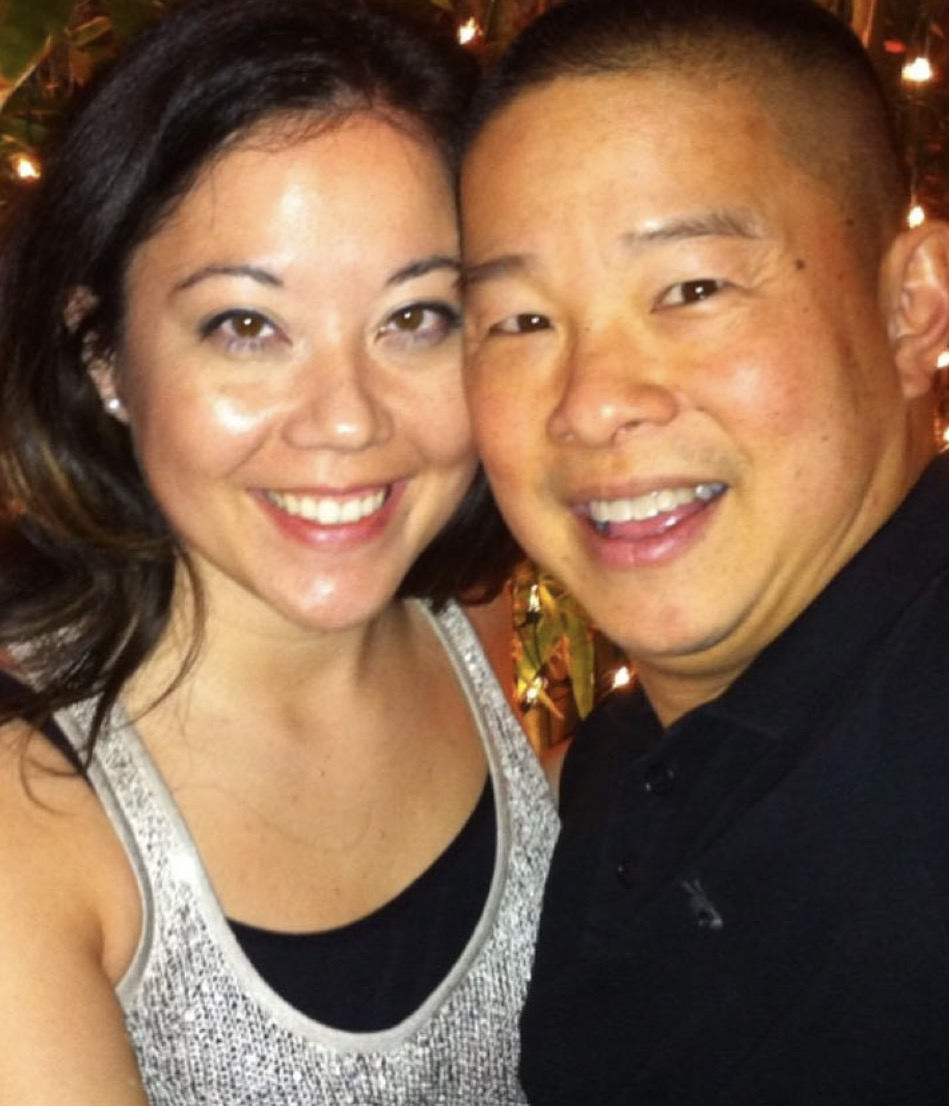
My husband’s family story is also Asian American, but very different from mine.
His great-grandfather left a village in Guangzhou province devastated by violence, poverty, overtaxation, natural disasters and land scarcity. He came to the United States despite the Chinese Exclusion Act, when Chinese immigrants were explicitly barred and treated as both necessary and unwanted.
An uncle already in America vouched for him so he could come to work in Montana.
From mining towns to Alaska fish canneries to Seattle’s Chinatown, generation by generation, the family built a life through relentless work, sacrifice and community. My husband’s grandfather raised eight children with the belief that success here was possible if you worked hard enough to claim it.
My husband grew up surrounded by Chinese American business owners, developers and restaurateurs who showed him that he could belong in America without leaving his identity behind.
That, too, is an American story.
Asian American and Pacific Islander Heritage Month is often reduced to food festivals, cultural celebrations, or lists of famous firsts. Those things matter. But this month also asks us to think more deeply about belonging — about the many ways families came here, survived here and imagined futures larger than the lives they left behind.
There has never been a single American story.
Maybe the most honest version of this country is found not in one definition of the American dream, but in the millions of ways people have searched for it.
Kari Mar is the editor and publisher of La Conner Community News.
