
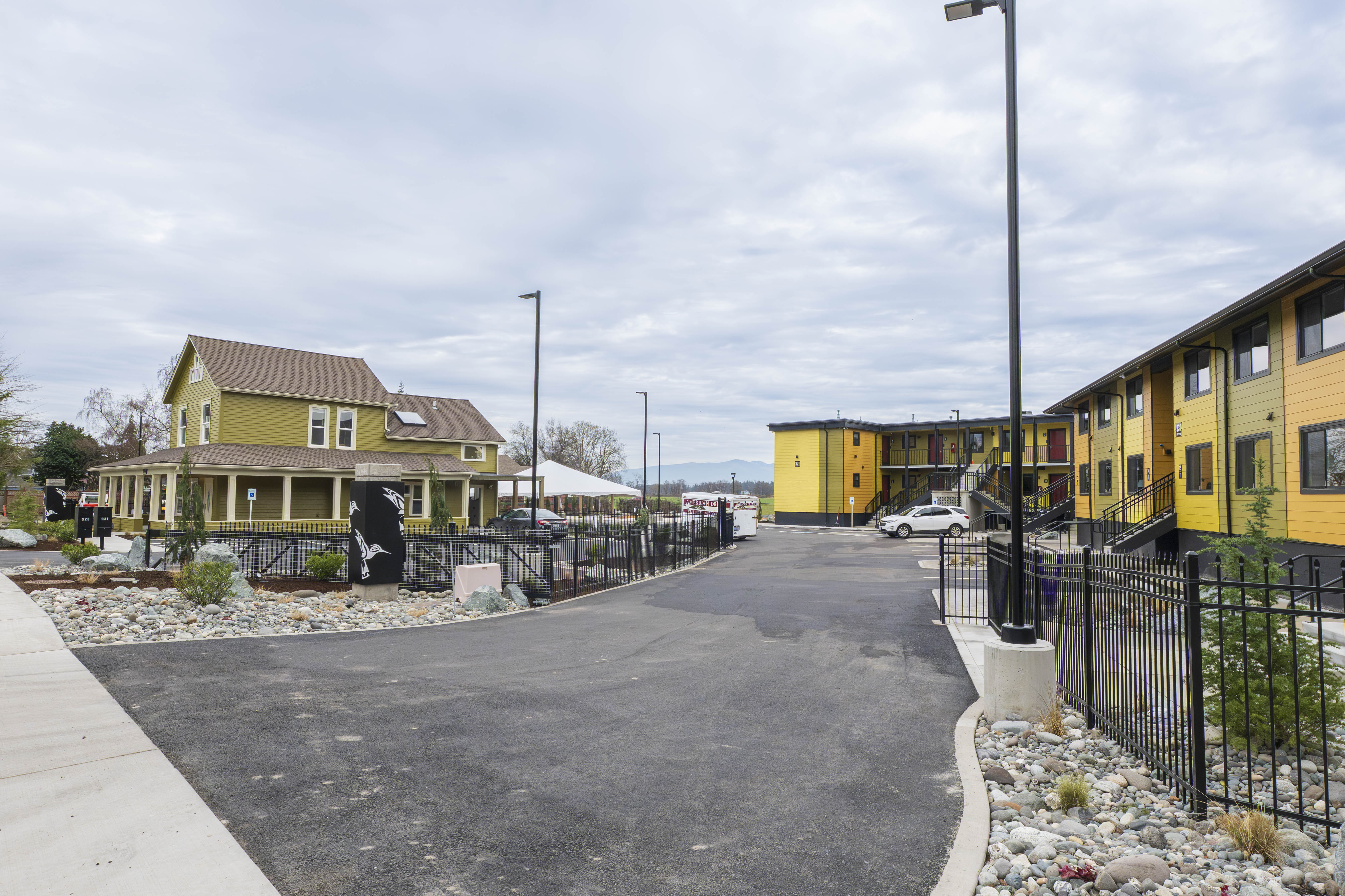
It was no ordinary ribbon-cutting celebration that marked the opening of the much-anticipated Didgwalic Wellness Center transitional housing project on Maple Avenue in La Conner last week.
“We’re helping cut ties to substance abuse,” said Jordan Wilbur, one of four designated witnesses to the Feb. 12 program.
The newly refurbished apartments won’t just provide housing, several speakers stressed, but will also serve as a place of healing and renewal for those transitioning from the treatment phase of recovery.
Didgwalic CEO Beverly Keyes said the project features 12 family units, additional apartments for singles, and one that will remain open to accommodate any crisis that might arise.
Inspire Church Pastor Doug York, among local prayer warriors called upon to bless the project, stressed that it will offer “hope and a future” for its residents.


“The people who move in will receive the words and tools they need. As people drive by, they can say, ‘There’s a light in our community,’” York said.
Owned and operated by the Swinomish Indian Tribal Community, Didgwalic focuses on a holistic care model designed to provide comprehensive, individualized services to those seeking treatment and recovery from substance use disorders.
The Didgwalic Wellness Center on March Point Road northwest of La Conner, which opened in 2018, provides care to tribal and non-tribal adults alike.
Transitional housing was soon seen as a necessary next step in the Didgwalic mission. Years in the planning, Swinomish officials say the transformed facility at the south end of town will provide site services to all tribal members and apartments for up to 28 tribal members.
“We started putting money into this seven years ago,” recalled La Conner resident John Stephens, now retired after tenures as the Swinomish Social Services director and Didgwalic CEO. “We didn’t have a place to house people who were in the process of repurposing their lives.”
Stephens, of Haida tribal descent, invoked the names of late Swinomish elders Laura Wilbur, Laura Edwards, Susan Edwards Wilbur, Robert Joe Sr. and Chet Cayou Sr. when describing the Didgwalic approach.
“Forty-six years ago, I was welcomed into the Swinomish community with three words – compassion, respect and dignity,” Stephens said. “The elders at Swinomish taught me that from day one. They’re the reason this beautiful facility is here today.”
Swinomish Sen. J.J. Wilbur, who is also a La Conner School Board member and Skagit County Fire District 13 commissioner, related that in 2024 the Swinomish Development Authority (SDA) bought the former Conner Place Apartments, which had fallen on hard times, from the Swinomish Housing Authority for refurbishment into the transitional housing complex.
Since then, the buildings have been raised above the flood plain and fully remodeled.
SDA also bought the house immediately north of the transitional units and converted it into Didgwalic staff and counseling offices. Project planning captured the Swinomish credo of “loving, caring and sharing.”
“This is our passion,” Keyes said. “Our passion is treatment.”
Aurelia Bailey, Swinomish senator and cultural events director, echoed that sentiment.
“We’re thankful for this facility because we have people seeking to find their way,” Bailey said. “We’re grateful because so many people didn’t make it. Our hope and dream is that people out there fighting that battle will find healthy living.”
Didgwalic Operations Manager Holle Edwards said that transitional housing residents will have access to budgeting and other life skills tutorials and services.
“We’re excited to get everyone moved in and give them a home, stability and structure,” she said.
Representatives of Washington Gov. Bob Ferguson and U.S. Rep Rick Larsen also attended the ribbon-cutting and offered brief congratulatory remarks.
“The governor is proud of the work that’s being done here,” said Ferguson spokesperson Jeremy Harrison-Smith.
Swinomish Sen. Brian Porter, another of the ceremony’s witnesses, said the transitional housing project represents the tribe’s response to cries for help from families of those fighting substance abuse.
“This is an answer to the cry that we do something,” Porter said. “I really feel that we’re moving in the right direction.”
Cathi Bassford, also chosen as a witness, emphasized the spirit of empathy embodied by Didgwalic.
“You can’t understand what people go through unless you’ve been there,” Bassford said. “We need to love them.”
Program speakers were blanketed in honor of their participation, for which master of ceremonies Eugene “Huge” Edwards, a Didgwalic staffer, expressed gratitude.
Edwards said the ultimate Didgwalic goal is to successfully treat and defeat all substance abuse.
“I always say that someday we’ll work our way out of our jobs,” he said.
Bill Reynolds is a general assignment reporter for La Conner Community News.
