
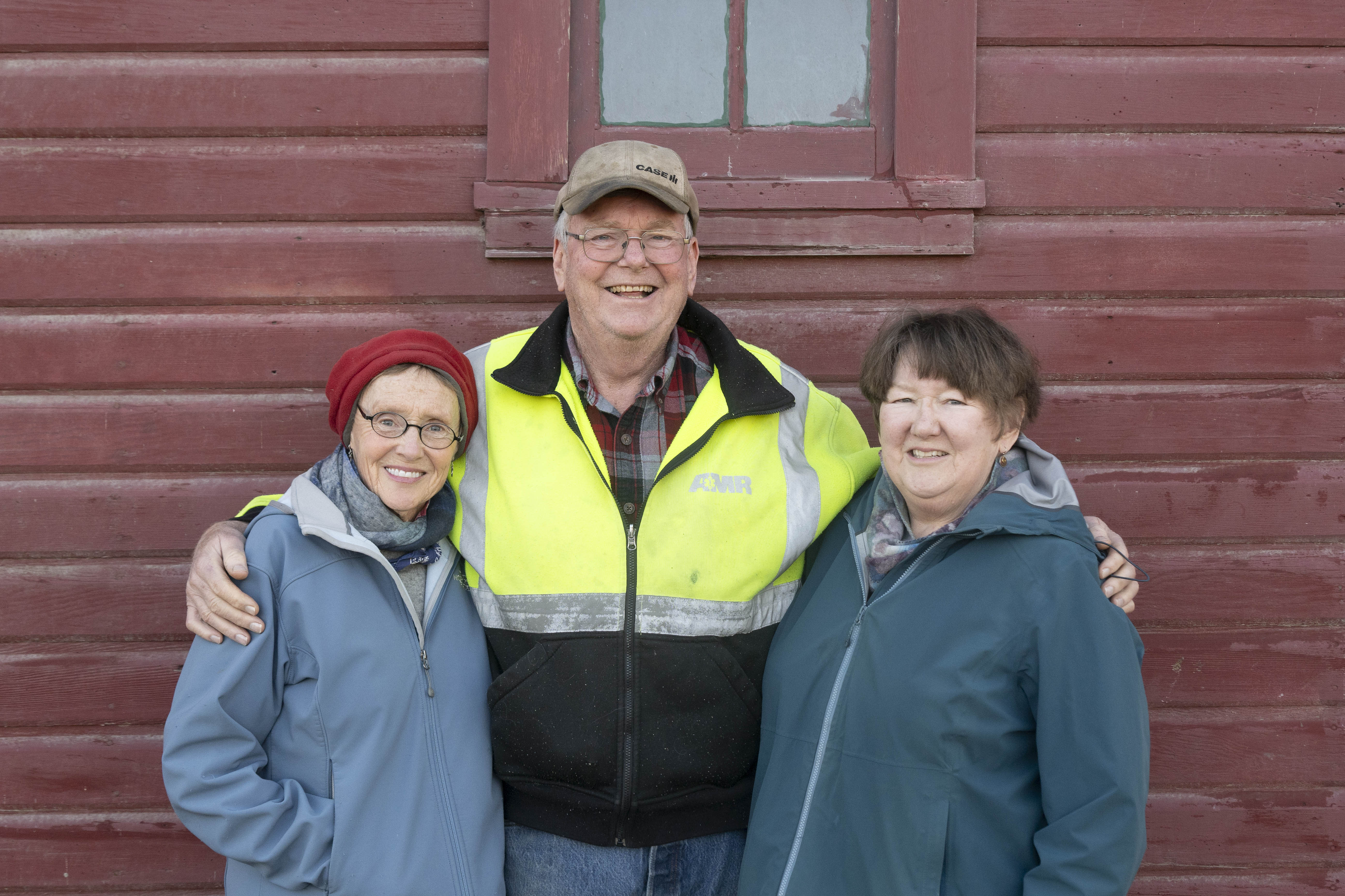
Behind the rural appeal that draws visitors and workers to Skagit Valley are also the families that have stewarded the land for generations.
For farm owners like Dave Hedlin and John Thulen of La Conner, carrying on the family tradition is about more than achieving self-sustenance — it’s a responsibility towards what their great-grandparents, grandparents and parents have built over the decades.
Eventually, they hope, the generation after them will embrace that duty until the next is ready to take the torch.
Hedlin owns and runs Hedlin Farms with his wife Serena Campbell, and has been working in the business since 1974. That was 68 years after his grandfather Rasmus Koudal, a Danish immigrant, moved and began farming in what Hedlin called “Magic Skagit” for its world-class soils and dedicated agricultural community.
To ensure food production continues to be an integral part of the valley’s identity, farmers have to prepare to transfer their farms to the next generation upon their retirement or passing, whether that successor be a family member or, if no relative is available or interested, an outsider who shares a devotion to the land.
“Succession is a key portion of sustainability in agriculture in Skagit County,” said Hedlin, a founding board member of Skagitonians to Preserve Farmland. Skagitonians is one of the organizations that is partnering with Skagit County Farmland Legacy to host a three-part workshop series on farm succession planning, the second part of which Hedlin attended two weeks ago along with many local farmers.
Hedlin did not disclose details of his succession plans, which involve his children Lauren and Arne, but said the discussion has been going on for about 12 years. The fourth generation in his family has known since childhood that if they ever want to come back to the farm, they are welcome to, but not until they earn a four-year degree in any discipline and have completed two years of work somewhere else, he added.
Hedlin’s Nephew Kai Ottesen and his spouse, Jules Riske, have owned and operated the roadside farmstand under the Hedlin’s Family Farm name for two years, according to Hedlin and the business’ website.
Eventually, the cousins will take over stewardship of the home farms, he wrote in an email.
Being a farmer can be both rewarding and tough, Hedlin said. Faced with what many lament is a labor shortage, as well as commodity prices that have not been keeping up with the cost of equipment and labor, farmers need to be motivated by a good dose of passion. If that “fire in the belly” isn’t there on a daily basis, he said, neither the farmer or the farm will be happy.
Hence, his children are not expected to follow in his exact footsteps.
“We won’t be disappointed in them if they don’t farm, but we will be disappointed in them if they don’t have a strong sense of stewardship for the family land,” he said. “If you don’t want to farm, that doesn’t mean you should sell the land, it just means you have to find somebody else who wants to farm.”
Just a 10-minute drive away from Hedlin Farms is Thulen Farms, the home of Pioneer Potatoes.
John Thulen’s ancestor John Jacob Peth, the son of German and Swiss immigrants, established a farm in Skagit Valley in the mid-1800s with his wife Mary Jane Black. John and Sofie Thulen, both immigrants from Sweden, also chose the valley to establish their farm. The children of these pioneers, Gail Thulen and Colleen Peth, married in the 1950s and continued to farm in the valley, with their son John now co-owning the business with his 30-year-old son Wylie, according to the farm’s website.
Thulen shares a similar sentiment to Hedlin’s. As a father of three, he doesn’t demand his children to run the business, but hopes they will help the family keep the farming legacy going on rather than sell the farm once the opportunity arises.
“What we have was built upon the backs of prior generations, so it isn’t right for all of sudden to stop and to say ‘Hey, I’m gonna cash out,’” he said.
After returning to the family business four years ago, Thulen’s son is poised to be the one who will fully take the controls. It is both a blessing and a curse, he recalled telling him, as he would also have to deal with being responsible for many employees, as well as common biz challenges like debt.
One day, Thulen won’t be able to run the farm with the same energy. To ensure the business remains successful, farmers should be prepared to transfer the land not after they die, but just when they are starting to “run out of gas” and the business is in a good spot, he said. That is, if the family dynamic is healthy enough to have those conversations and reach an agreement. If not, a third party can help facilitate those talks.
“If you’re that person who wants to run the race by yourself, by the end you’re pretty tired, and probably your farm will be too. You won’t be able to do all the things by yourself, you won’t be able to manage the people as well, you won’t be able to fix the machinery yourself,” he said.
Once the farm is fully owned by his son, Thulen won’t step away completely, but will be available to provide guidance through the good and bad years that are inevitable in this trade, without getting in his way.
Most farmers, he laughed, don’t retire — they just go home earlier than they used to.
Luisa Loi is a general assignment reporter for La Conner Community News.
