
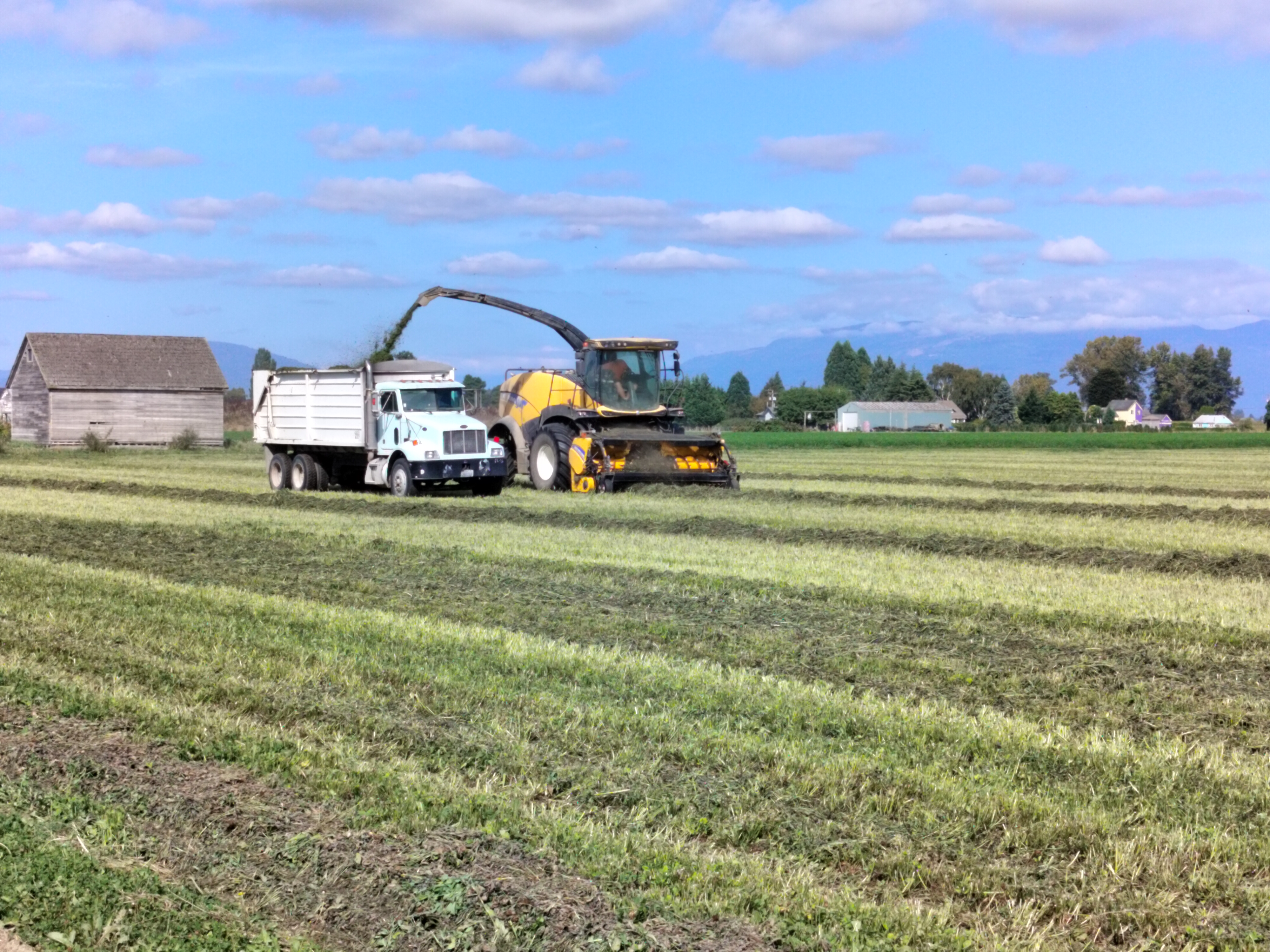
Cool temps, strong harvests
Dean Swanson of Swanson Family Farms said “timely rains and not too many” are why local farmers are cheerful about this dry year.
No big spring deluge delayed planting or drowned potato starts before they poked their heads up. Plentiful irrigation water and a million-dollar early August rain have kept the flats in the “moderate” drought range — compared to “severe to extreme” drought conditions present upriver, according to the National Integrated Drought Information System.
As junior water right holders, farmer-members of the two irrigation districts on the flats and Fir Island must stop irrigating when the Skagit River’s instream flow level drops below the Washington State Department of Ecology’s baseline for keeping fisheries healthy. Under a new five-year agreement between Districts 15 and 22 and the Skagit Public Utility District, farmers have been able to access water all summer using the PUD’s unused senior water rights.
Dave Hedlin of Hedlin Family Farms has a permit to pull water from Sullivan Slough, and like Swanson, also purchases water directly from La Conner. That’s expensive, Swanson said, “but when you put all this money into seed and groundwork, and all you need is water to make a 100% crop versus a 50% crop, it’s worth every penny.”
Hedlin and Swanson rely on mulching and drip lines to get water straight to the roots and save money. So does Jen Hart of Hart’s Farm and Homestead on Best Road. Jason Vander Kooy, John Thulen of Pioneer Potatoes, and other large growers use big irrigation “guns” to water their corn, potatoes, and grass.
“When you put all this money into seed and groundwork, and all you need is water … it’s worth every penny.”
Dean Swanson
Most crops are irrigated just three times. Cabbage is irrigated twice. “One real good soaking” is all corn needs to thrive, Vander Kooy said. Potatoes are irrigated at least twice and in fields with access to an irrigation ditch or the river, up to five times.
Irrigation season is over, and farmers are hoping for a dry September. Dry weather will “help the crops dry down and finish off, especially corn,” Vander Kooy said.
Pollination was awesome this year, according to Thulen. “All the bees could do their work, the cabbage seed loved it, and potatoes are looking good, but it’s not over ‘til it’s over, and we still have to get them out of the ground.”
He hopes to avoid a rerun of last fall, when wet weather left potatoes to rot in fields too muddy to dig.
Swanson said his everbearing Albion strawberries seemed to go on forever and his cucumbers produced for five weeks because he “spoiled them.”
Cauliflower “started out good and the last couple of blocks we cut have just been spectacular,” Hedlin said. It was a good year for sweet corn, too, because he grew them raised beds and plastic mulch so he could offer them three weeks before everyone else.
Cabbage seed “seemed good, but we won’t know how we did until we get the germination and purity reports back,” Hedlin said. Cabbage seed lined both sides of Chilberg Road, grown by the Hulbert family on the north side and Hedlin on the south.
The only complaint? Cooler temperatures. Hedlin’s tomatoes did very well inside his high tunnels, but Hart’s field tomatoes never got the heat they needed. Less heat also means corn will be chopped a week or two later. But summer temperatures were perfect for the beets, carrots, spinach, leeks and other cold-weather crops that Ralph’s Greenhouse grows along Kamb, Calhoun, and Penn Roads.
In fact, owner Ray de Vries has nothing but good things to say about the 2025 growing season.
“This has been one of my most comfortable years to farm, because I had enough people to do the work and sufficient funds to pay them,” he said. “This has been a fine year.”
Anne Basye is a freelance writer based in greater La Conner.
