
Kari Mar
La Conner Community News
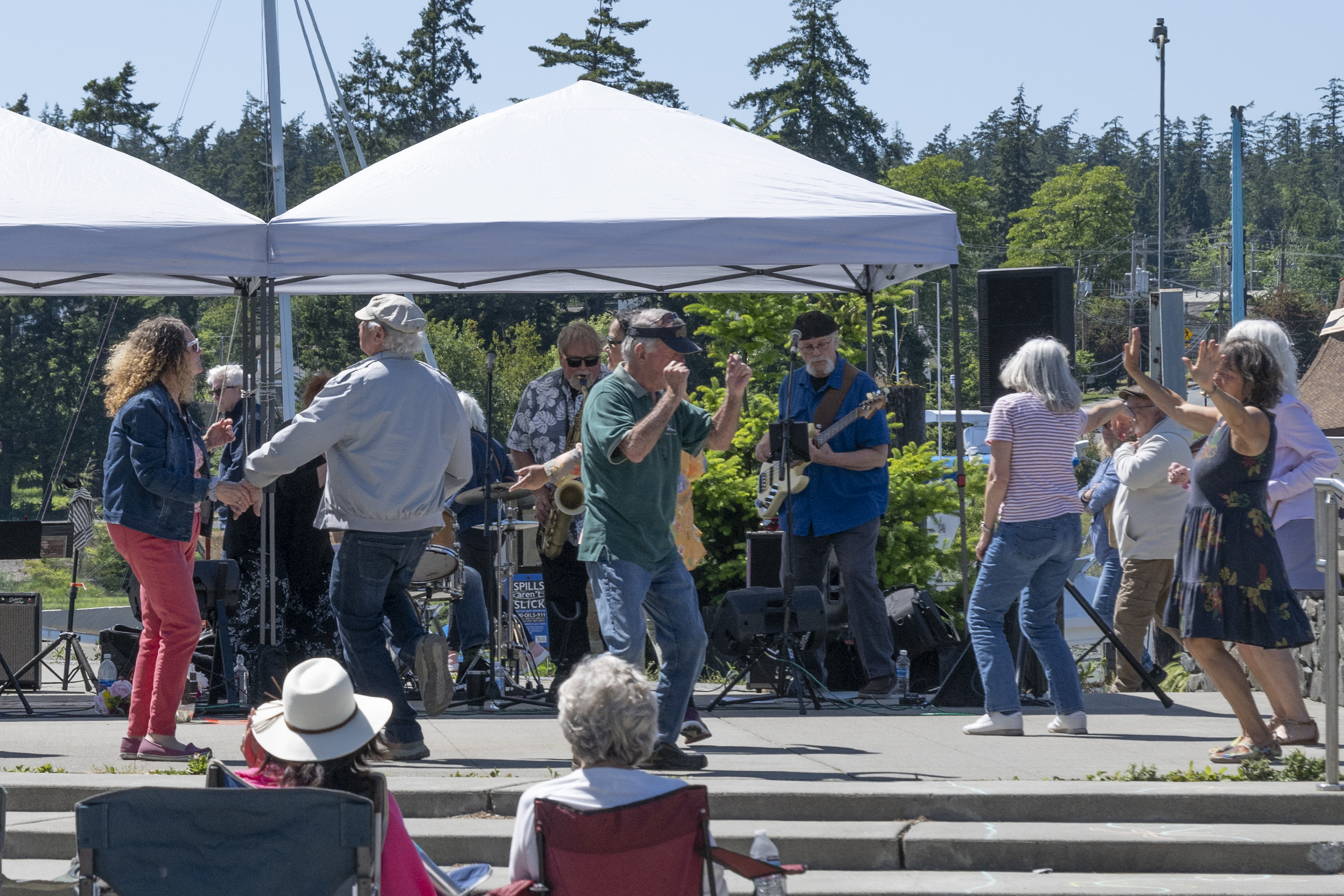
The communitywide drama over the decibel levels of the Gilkey Square Sunday concerts started with a mistake.
At the beginning of the month, when the controversy first bubbled up, La Conner Community News reported Mayor Marna Hanneman saying this:
“We made a mistake. We followed Washington code, and we didn’t go deeper to find out how absurd it was” when applied to live music in the square.
That should have been the beginning of a conversation.
Instead, it became the beginning of a digital pile-on.
Social media posts stacked up quickly, and the language became increasingly vitriolic. It started simply enough: La Conner Live organizer Gloria Hulst posted a notice to musicians saying she would cancel this year’s concerts because they could not comply with the Town’s 55-decibel limit — roughly the volume of a normal conversation.
What followed was social media organizing at both its best and its worst.
At its best, residents passionately expressed how important the Sunday concerts are to the identity and spirit of La Conner. People rallied around music, community, dancing and the joy the concerts bring to the town.
At its worst, social media became a breeding ground for conspiracy theories, misinformation and outright falsehoods.
Claims circulated that town leaders secretly wanted to kill live music. People accused the mayor and council of authoritarian motives. One rumor claimed that La Conner’s beloved dancing sweethearts, Jerry and Jeri Kaufman, had been told to turn off their music and stop dancing in the square.
When we asked Jerry about it, he said plainly: “I have no idea what that is about. Nobody has ever told me that.”
But that didn’t stop the digital mob.
Soon, people from outside La Conner were chiming in, calling town leadership “fascist” and comparing local officials to the Gestapo.
Hold up for a minute, folks.
Over a mistake?
This is social media agitation out of control.
When La Conner Community News asked commenters for specifics behind some of the accusations and conspiracy theories, we were refused. When asked, one commenter said she did not owe the newspaper an explanation for her claims.
And she’s right — she doesn’t.
But journalists are held to a different standard than social media posters.
We are required to verify information before publication. If you challenge a reporter on the accuracy of a story, they should be able to walk you through the reporting process, the interviews conducted, the documents reviewed, and the steps taken to confirm the truth.
Why go through all that effort?
Because the role of journalism in a democracy demands it.
The protections afforded by the First Amendment are not a license to spread rumors without accountability. They exist because a free press serves the public by pursuing truth carefully, transparently, and responsibly.
This week, the town council unanimously approved a temporary solution increasing the decibel limit for the summer concerts while officials gather data and work toward a more realistic long-term policy. That is what accountable government looks like: recognizing an error, listening to residents and adjusting course in public.
Democracy is messy. Small towns are messy. Public meetings can be emotional. People will disagree.
But if we lose our ability to distinguish between mistakes and malicious intent — between verified facts and viral rumors — then we are no longer having civic conversations. We are simply feeding outrage machines.
