
With local and state approvals secured, attention now turns to what comes next for Seattle City Light’s sweeping Skagit River settlement — including federal review, public input and $1.2 billion in promised environmental and infrastructure investments.
It’s part of the yearslong effort to relicense Seattle City Light’s Skagit River Hydroelectric Project. Most recently, the Seattle City Council unanimously passed the settlement agreement Tuesday. Last week, Skagit County commissioners also gave the OK to the settlement agreement after seven years of negotiations and contention over some of the provisions for endangered salmon. The Swinomish, Sauk-Suiattle and Upper Skagit tribes all signed in early March.
Once the agreement is signed by Seattle Mayor Katie Wilson, it will go to the Federal Energy Regulatory Commission (FERC) in May for environmental review and potential adoption, clearing the way for early work to kick off.
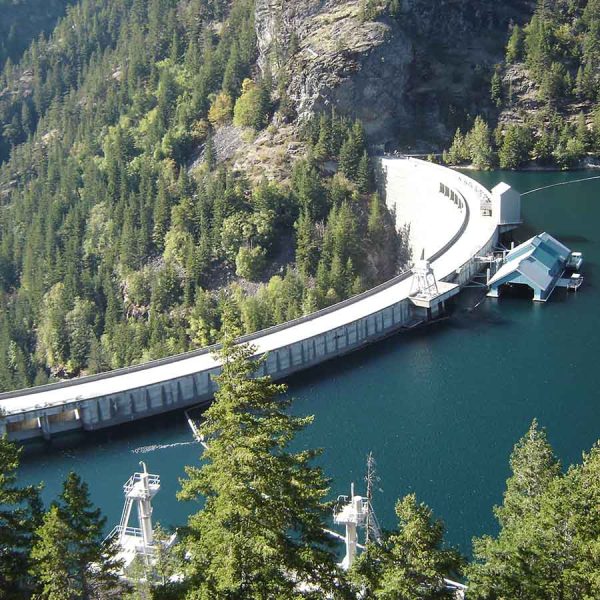
Seattle City Light operates the project — which consists of the Diablo, Gorge and Ross dams and over 100 miles of transmission lines — under a license issued by FERC. Since its latest long-term license expired in 2025, the public utility has been relying on annual permits while seeking a 50-year renewal that, with FERC’s approval, could be issued in 2030.
The comprehensive settlement agreement includes provisions that would be incorporated in the new license and require Seattle City Light to spend up to $979 million on fish passage and $200 million on downstream habitat restoration projects,among other things.
This is one of the largest environmental investments of its kind in Washington and represents a significant milestone in the pursuit for environmental justice led by the Swinomish, Upper Skagit and Sauk-Suiattle tribes whose cultural sites and practices were significantly impacted when the dams were built more than a century ago.
Skagit County approves
Last Monday, representatives from the Upper Skagit Indian Tribe and the Sauk-Suiattle Indian Tribe urged the commissioners to sign, emphasizing the need for the county’s support and sharing how hard the tribes have fought for the stipulations in the agreement.
The commissioners, who had previously voiced their concerns over Skagit County and the dike and drainage districts being excluded from some of the conversations that shaped the agreement, acknowledged the benefits that would come out of the 1,000-page document, such as improved flood management and salmon populations rebounding.
Still, they remained wary of Seattle City Light and the City of Seattle, whose representatives previously assured county officials and the public that they were committed to good faith implementation.
During the meeting, Commissioner Joe Burns said that while the agreement doesn’t “right the wrongs of the past,” it offers an opportunity for Skagit’s community to come together in ensuring the objectives set by the agreement are met and, as Commissioner Peter Browning said, that Seattle is held accountable to its promises.
The beginning of public comment
In response to concerns that the agreement was negotiated confidentially and made public only recently despite its significant impacts on Skagit’s communities and infrastructure, Chris Townsend, director of natural resources and hydro licensing at Seattle City Light, said in an interview that this was common practice for all settlement agreements.
The public and anyone who feels they were left out will still have a chance to provide input during what he said will be an extensive public comment process that will begin as soon as the agreement is submitted to FERC.
“This isn’t the end of the opportunity to participate — it’s the beginning,” he said.
While signature from the Treaty Tribes and the state and federal agencies involved is vital as they have the power to condition the license, the agreement does not require signatures from parties like Skagit County and the local dike and drainage districts in order to be implemented.
However, Townsend said, including those signatures would show FERC that the measures have broad support from the partners. On top of that, signing would grant those stakeholders a seat in the Skagit License Implementation Committee, or SLIC — a group that guides the technical implementation of the license. Entities that do not sign the comprehensive settlement agreement would have a hard time joining the SLIC later, he said.
The Skagit dike and drainage districts, which declined to sign due to concerns with the habitat fund and the uncertainty that City Light will implement the agreement in good faith, are still invited to sign and join SLIC and have about a month to change their mind — or until Mayor Wilson signs the agreement, perhaps sometime in early May, Townsend said.
What’s in store
Seattle’s commitments fall into four main categories: fish passage, flood risk management, public recreation and education, and five off-license agreements that the Seattle City Council approved Tuesday.
“It really is an unprecedented package of commitments that will have the effect of transforming the Skagit River into one of the healthiest river systems probably in the country,” Townsend said.
Under the fish passage umbrella is the Fish Passage Program, which will cost Seattle up to $979 million over 50 years. While most of the dams in the region have a fish passage system, the Skagit’s dam trio does not, and they are so tall that creating one could not be achieved with a fish ladder, Townsend said.
The best solution appears to be setting up traps for fish on both sides of the dams, then loading them onto a truck and taking them to the other side where they can be released, he said. Juvenile fish would be trapped upstream and hauled downstream, where they can swim to the sea, while the returning fish would be given a ride upstream to lay their eggs and repeat the cycle.
The fish managers — the Tribes, the Washington Department of Fish and Wildlife and the National Fishery service — have a year to decide which fish species to pass based on their likelihood of successful spawning and returning. Studies will then assess how the fish passage should be tailored to those anadromous fish, Townsend said.
If the fish trap method meets the feasibility criteria — like cost, road access to the forebay and reasonable certainty that the project would increase tribal harvest and help with the recovery of endangered species — and ends up being selected, fish that are not part of the species chosen by the co-managers would be released back where they came from, Townsend said.
The fish passage facilities would be completed and operational within 24 years of the license’s issuance date. In the first year or two after the settlement agreement goes into effect, Seattle City Light will conduct some early work like funding studies, designing, producing a budget and a schedule for construction, and more, the agreement states.
During a Board of County Commissioners meeting on March 24, Lora Claus, executive director of Skagitonians to Preserve Farmland, pointed out that if the minimum amount — $505 million — to be spent on the Fish Passage Program is not spent on capital costs, those funds can be spent “on other components of the fish programs,” which she worries might mean buying Skagit land.
She wasn’t the only speaker from Skagit who, both in the Commissioner’s Room and Seattle City Hall, said they worry the provisions in the agreement would cost acres of prime soil and lead to an increase in land prices.
Townsend replied that the City of Seattle, which owns City Light, will not — nor can — condemn land outside of Seattle’s city limits.
Funds for mainstem and estuary habitat
Included in the fish passage efforts are also $75 million dedicated to the restoration of the Skagit’s mainstem habitats, another $75 million for estuary habitat projects, and $50 million to cover any unmet needs, Townsend said. These projects would improve rearing and migration habitat for juvenile salmon, remove barriers and support spawning, and protect instream flows and water quality to support healthy fish, according to a fact sheet.
At the March 24 meeting, Commissioner Ron Wesen said he was “troubled” by the goal of achieving 200 acres of restored estuary habitat within four years of the approval of the estuary plan, 600 acres within seven years, and 1,300 acres within 15 years.
To balance salmon recovery with farmland preservation, the land will only be purchased from voluntary sellers, and the estuary restoration efforts will be guided by the local plans and priorities developed by the community in Skagit, according to the fact sheet.
Other speakers, including Dike District 3 Commissioner and crop farmer Darrin Morrison, were skeptical about implementing mitigation measures many miles away from the dams, but Townsend explained that recovery will be accomplished by considering the health of the river from the headwaters to the estuary.
Managing flood risks
The flood risk management provisions, which received praise from various Skagit speakers, are another important component of the comprehensive settlement agreement as the region is no stranger to recurring destructive floods.
For this purpose, the settlement updates flood storage and release protocols to protect communities, infrastructure and farmland. It also supports long-term planning for flood resilience and further aligns dam operations with local needs, like those of Skagit County and the diking districts, the fact sheet states.
The improvements would guarantee a larger flood pocket and engage local governments, like the county and the drainage and dike districts, in decision making. Without the flood pocket in December, Townsend said, Mount Vernon and other communities would have been under 4 additional feet of water.
Support for learning
City Light is committing to improving public recreation facilities and supporting the Environmental Learning Center, which is operated by the North Cascades Institute and will continue to provide hands-on outdoor education and cultural programming, according to the fact sheet.
The off-license agreements include a $90 million agreement with the National Parks Service, a $28 million agreement with the U.S. Forest Service for various improvements, and agreements with each tribe.
In the arrangement with Swinomish, City Light grants access to specific Seattle lands for hunting, fishing, gathering and other cultural practices. City Light would also pay the Swinomish $5.5 million within 90 days after the execution of the agreement, then $8 million within 90 days after the agreement goes into effect. The compensation also includes $15 million over a 13-year period to support the Tribe’s implementation of cultural practices and programs, and an annual payment equal to 6% of the hydroelectric project’s electric production for the duration of the new license and future licenses — or a minimum of $1.5 million per year.
Questioning Seattle City Light
Echoing the concerns shared by the commissioners in previous meetings and statements, local farmers and representatives of the dike and drainage districts said they worry about what they called a lack of transparency and involvement in the process, on top of fears that Seattle City Light won’t keep its word.
Part of the mistrust comes from the exclusion of Skagit County and dike and drainage districts from the habitat fund negotiations as they involve critical county infrastructure and farmland.
Jack Fiander, attorney for the Sauk-Suiattle Indian Tribe, said at the March 30 commissioners’ meeting that the agreement includes a dispute resolution process that the parties who have felt excluded can invoke if they feel Seattle is not living up to its commitments.
The week prior, Matt Love, an attorney representing Seattle, said the projects will be selected through a transparent planning process involving local governments.
Will Honea, an attorney for Skagit County, questioned Seattle City Light’s trustworthiness in multiple instances, citing, among other things, recent changes in leadership and the fact that the SLIC work group meetings where the habitat funds were discussed were not publicly available, nor were the agendas and minutes — something that he said may cause suspicion and concern.
In the interview, Townsend said he expects those meeting materials will be made fully available to the public, though that is not a requirement as he said the meetings did not involve elected officials.
“The SLIC will be determining the protocols for managing both the SLIC and the work groups and I anticipate that the agendas and the meeting materials will be fully available,” he said.
In response to the concerns that the City of Seattle and City Light may not be trustworthy, Townsend said it is a “negative and false narrative,” maintaining that the public utility implemented 100% of the obligations outlined in the 1995 license, and whatever obligations were not implemented were replaced by alternatives decided by the parties involved.
On March 30, while encouraging the county to come together in ensuring the projects will actually help achieve recovery goals and that Seattle implements fish passage in good faith, Honea conceded there are “good things and bad things” in the settlement agreement, and recommended the commissioners sign it.
“We need to support our Skagit tribal friends and neighbors on this,” he said.
A fight for fishing rights
The Treaty Tribes have taken the public utility to court several times over the years, with the Sauk-Suiattle Tribe suing for misrepresenting the environmental impacts of the dams, and the Swinomish Tribe negotiating for flood plain and estuary habitat restoration provisions to be included in Chinook salmon recovery plans, as reported by The Seattle Times.
Amy Trainer, environmental policy director for the Swinomish Tribe, wrote in an email that the Tribe put a lot of time and money into the settlement process, hiring some of the region’s best fish passage experts and taking input from tribal leaders and elders on cultural matters.
When asked to comment on Seattle City Light’s previous claim that salmon did not historically reach the upstream river that is now above the dams, Trainer wrote the agreement is “neutral” on historical anadromy as focusing on the future benefits of fish passage was deemed more productive.
The dams won’t be going anywhere, despite a petition to remove the Gorge Dam that was launched by an Upper Skagit tribal member and garnered over 50,000 signatures. Yet, the Tribes welcomed the settlement agreement as victory for all.
“This was a long process,” said Swinomish Tribal Community Chairman Steve Edwards on March 18 at Seattle’s Parks and City Light Committee meeting. “There were good days and there were bad days … But at the end of the day, we were able to sit at the table and have these conversations. There were times when we weren’t allowed to sit at the table. But here we are, at the table, building relationships with each other. That’s important.”
Edwards, who has been a fisherman for over 50 years, said the Skagit watershed and salmon are part of the Swinomish’s identity, so much so that the Tribe cooks a salmon meal for its elders every Wednesday.
The agreement, he said, will bring more life back to the river and keep feeding his people in the years to come.
“We want to set the table for seven generations,” Edwards said. “That’s who we are. By having this agreement in place, I know there’s a future. My people will always have salmon. The table will always be set.”
Luisa Loi is a general assignment reporter for La Conner Community News.
